One shot a week, 15 kg lighter?
 Avely Marjapuu1 thing to play with
I personally haven’t had proper weight problems. However, I gained weight when I changed my environment and moved to Miami, in the US, for an internship.
I never really thought about what healthy food is or how much I should eat. I just ate whatever I wanted, without thinking. After four months in the US, I had gained more than 10 kg and I did not feel great. My confidence went down and my favourite pair of jeans didn’t fit me anymore.
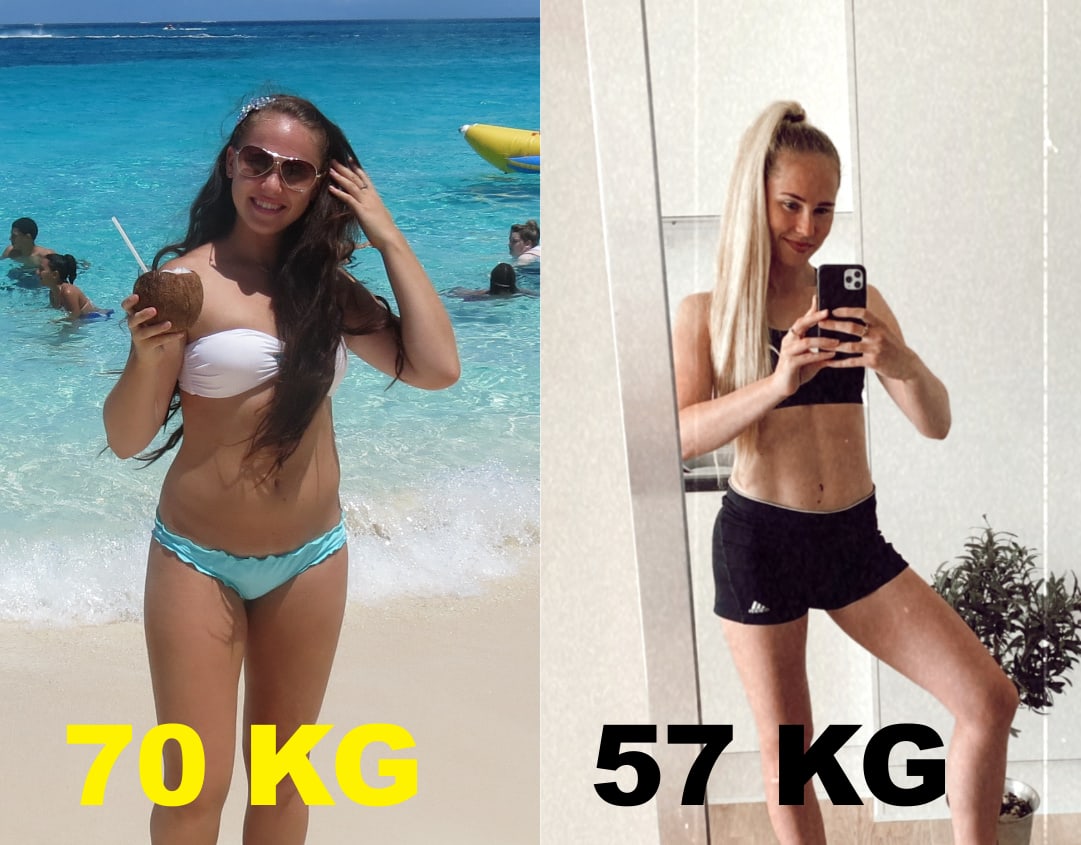
Only then did I start to learn about nutrition and exercise properly. When I moved back to Europe, the combination of knowledge and a new environment helped me start losing weight. I managed to change how I looked through my environment and lifestyle.
Today’s helper for millions of people is semaglutide, a GLP-1 medication better known as Wegovy or Ozempic. So I wanted to see the data in the research paper, and found this graph particularly interesting:
Slide the week forward to see how much weight each group lost →
The study included 1,961 adults in 16 countries who had obesity, or overweight plus a weight-related condition like high blood pressure. None of them had diabetes. Participants’ average age was 46 and their average weight 105 kg. Two out of three got a semaglutide injection (2.4 mg) once a week. One out of three got a placebo injection. Neither they nor their doctors knew which one. And everyone got the same lifestyle support for 68 weeks: a counselling session every four weeks, 500 fewer calories a day, and 150 minutes of activity a week.
After 68 weeks, the semaglutide group had lost on average 14.9% of their body weight, about 15 kg. The placebo group lost 2.4%, about 2.6 kg. Semaglutide reduces appetite, so people eat less. This is thought to come from its effects on the brain.
The trade-off
Every drug has side effects, so it’s always important to weigh the trade-off. With semaglutide, the most common were stomach and gut problems, like nausea and diarrhea. They were mostly mild to moderate, and usually passed with time.
People also lost muscle, not just fat. In 140 participants who had body scans, fat went down by about 19%, and lean mass, which is mostly muscle, by about 10%.
The study doesn’t show the long-term effects and side effects. It was published in 2021 and followed people for 68 weeks, so it would be interesting to know what we’ve learned since.
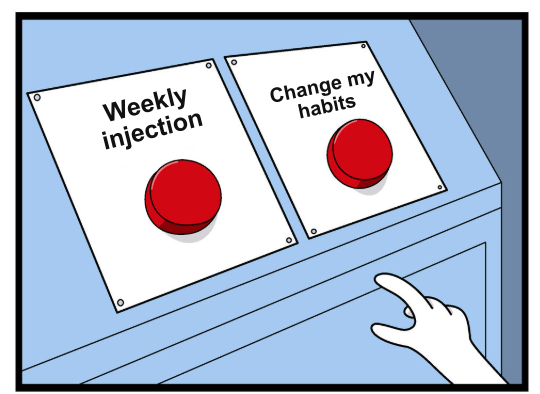
And here’s the part that reminds me of my own story. The placebo group got no drug, only lifestyle support, and still almost one in three lost 5% or more. The injection makes it easier to eat less. But the environment you live in, and the habits you build, still decide what happens next.